Lead generation is more than just collecting names or email addresses; it’s about finding people who need what you’re selling and moving them toward becoming customers. To do it successfully, you have to know where your target audience is and what they’re doing, figure out the problem they’re trying to solve, and then let people know where you fit into their solution.
Lead generation tips that work are the ones focusing more on quality over quantity: This is what gives businesses the ability to attract better prospects, close more sales and establish strong relationships that keeps revenue coming in steadily.
The 4 pillars of lead generation

Lead generation is the process of attracting and converting potential customers into individuals who have expressed interest in your product or service. By capturing the attention of prospects and nurturing them into loyal customers, businesses can ensure a consistent stream of revenue while building long-term relationships.
Effective lead generation positively drives not only the financial side of the business, but also allows teams to prioritize quality sales opportunities and focus on conversion strategies. It generates an understanding of what sells, what has the highest turnover and what cold spots need to be strengthened. Without it, companies may find it difficult to identify their target audience and engage with them, resulting in missed opportunities.
1. Content marketing
2. Social media engagement
3. Email marketing
4. Landing pages and lead magnets
Lead generation for home services and contractors in Charlotte, NC
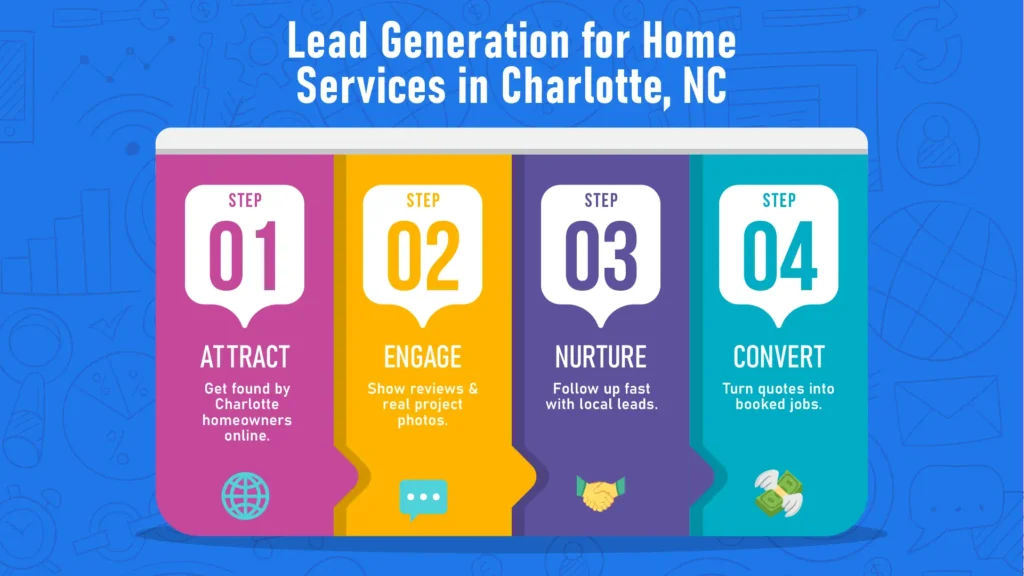
As the city grows and demand for housing increases, the Charlotte home improvement and construction market also is growing. Service, remodelers and contractors battle not only on price but for visibility — particularly online. To connect on the ground with homeowners looking for repairs, renovations, or maintenance help, lead generation must combine local SEO, reviews, and consistent communication.
According to the Charlotte Regional Business Alliance, the metro area added more than 25,000 new residents last year, driving demand for housing, remodeling, and property maintenance. This population growth creates constant opportunities for small and mid-sized contractors to secure new leads — if they position themselves where homeowners are already looking.
What contractors should do for lead generation going local
Optimize for local search
Showcase real work and reviews
Visual proof builds trust. Before-and-after photos, testimonials and project details offer potential customers a glimpse of what you’re selling. More than 80 percent of homeowners are more likely to hire a contractor with verified online reviews and established examples of previous projects, according to HomeAdvisor’s 2024 Home Services Trends Report.
Follow up quickly
Use targeted campaigns
Why not try paid ads on Google or social media targeting Charlotte neighborhoods or types of service (such as “kitchen remodeling in SouthPark” or “roof repair in Matthews”) to bring in qualified leads without blowing the budget.
Key tools to capture and manage leads

CRM Platforms
Customer Relationship Management (CRM) systems like Salesforce, Captello or HubSpot streamline lead management by:
- Centralizing lead
- They measure effectiveness and return on investment (ROI).
- They follow up on the audience that did not follow some step (g. they consulted your services, but did not click on the buy button).
- And most of these platforms track in real time, allowing you to know exactly what leads are being generated.
Lead capture forms and landing pages integrated with advertising
Automated follow-up and task management tools
How to convert your leads into paying customers

Converting a lead into a customer you can charge for depends on knowing who you’re talking to and what problem they need solved. It’s not a sale, not an ending; it’s the intersection of your service and their exact needs.
According to Lemlist, only about 12% of businesses are confident in converting leads at all, suggesting that they lose opportunities because they don’t respond quickly enough or personalize the message. A quick, personal follow-up helps the prospect feel acknowledged and develops trust from their initial interaction.
Once you are there, work to grow the relationship. Share useful information, display past results, and commit to regular communication, whether it’s over email, a brief call or on site. According to ProjectMark, organizations that are adept at nurturing leads experience a 50% increase in sales-ready leads, along with a 33% reduction in costs associated with conversions.
A subprocess for contractors and service providers might be to follow up after quoting, provide clear project timelines or show examples of similar work in order to put clients at ease before they commit.
Last you close the connection and maintain it alive.
If a customer decides to proceed, keep it straightforward and kind. Good experiences can lead to reviews, referrals and repeat business. Zendesk found that companies that offer long-term communication after the sale end up experiencing better retention and lifetime value. By following how many leads convert, how long that process takes and at what stages there’s attrition you can tweak your entire sales process.
Stage | What to Focus On | What to Measure |
Initial Contact | Respond fast, personalize outreach, qualify the lead’s needs | Response time, qualification rate |
Nurturing Phase | Stay in touch, provide helpful info, build credibility | Engagement rate, open/click rates |
Closing & Retention | Deliver a clear proposal, confirm satisfaction, request a review | Conversion rate, repeat customer rate |
How to Adapt Your Strategy for Long-Term Success
Lead generation is a dynamic process that requires continuous refinement. Stay ahead by:
- Keep up to date with industry trends, review the competition and verify that your differentiating factor is clear.
- Experimenting with new tools and techniques, contacting industry experts who can guide you like MoreKeting.
Remember, sales are important, but also building authentic and trust-based relationships with your audience, review the feedback they leave you and be willing to change or modify what is not connecting with the audience.
By implementing the strategies outlined in this article, businesses can achieve sustainable growth and maintain a competitive edge.