

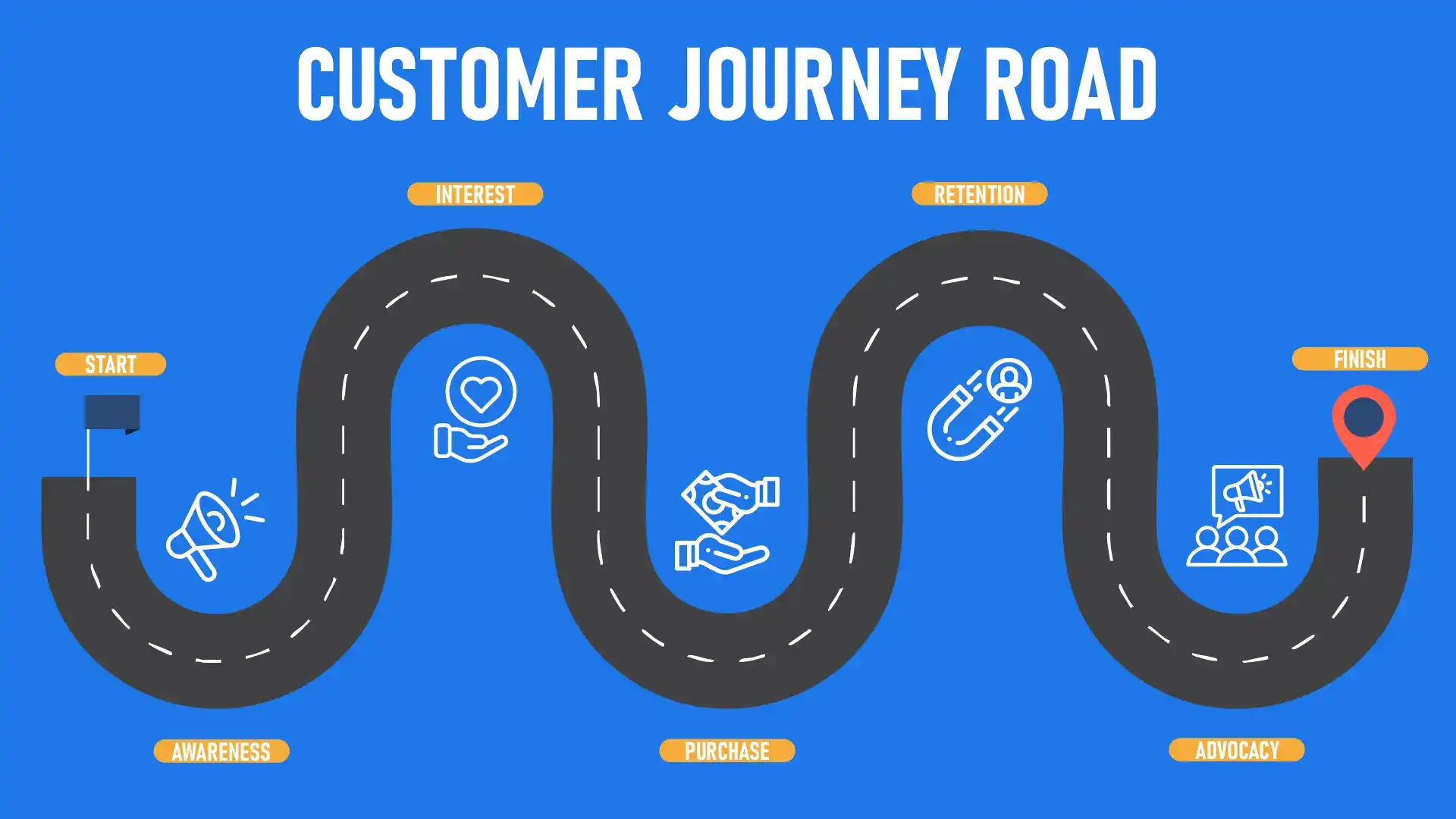
Are you struggling to understand your customer’s journey? Do you want to optimize your customer’s experience and drive more conversions? Then you need to create a customer journey map!
A customer journey map visually represents the steps your customer takes when interacting with your brand, from initial contact to purchase and beyond. Moreover, we’ll provide you with a FREE downloadable made especially for you to get started. Our step-by-step approach will help you to:
- Define your customer personas
- Identify the critical touchpoints in their journey
- Analyze customer feedback and behavior
- Optimize the customer experience
What is a customer journey map?

A customer journey is a map of each stage a customer takes with your brand. It starts from the first point of contact the customer has with your business to the time they purchased or completed the task.
The customer journey also shows areas of interaction with your brand such as a website, social media, email correspondence, or customer support. It also helps to qualitatively signal what the customer thinks or feels while experiencing each point in the journey, and importantly where you can improve.
Some of the things you can accomplish by mapping the customer journey:
- Identify pain points and points where they fall off
- Improve purchasing likelihood
- Personalize messaging for each stage
- Create better relationships with your customers
Mapping the customer journey is important for bettering the customer experience and loyalty, and making better and informed decisions for marketing and product.
What are the 5 stages of a customer journey?
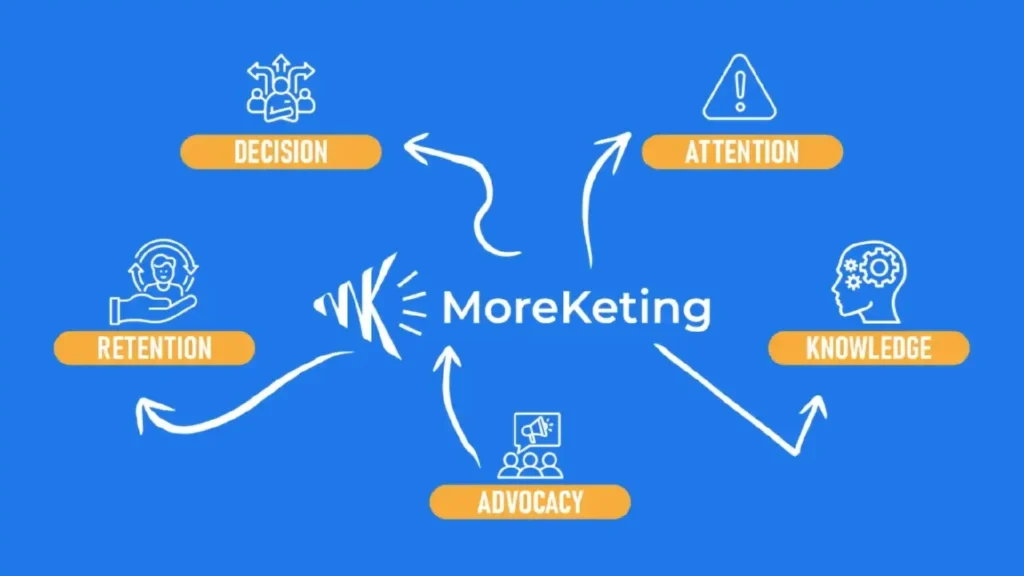
Knowledge, Attention, Decision, Retention, and Advocacy
- The Knowledge stage comes first; this is when possible clients first learn about a good or service. Since this phase starts the customer’s relationship with a company, it is very important.
- After knowledge comes the Attention phase, in this stage the customers search among the several possibilities open to them and critically assess them. To find out which goods or services best suit their needs, they could look into reviews, read reviews, or ask for recommendations.
- Next comes the Decision phase. The client here chooses whether to buy a product or service.
- The path then leads from the purchase to the Retention phase. Keeping consumers interested and pleased with their purchase is the main goal of this phase. To motivate return visits, companies sometimes use loyalty programs, customer service, and follow-up contact.
- At last we arrive at the Advocacy phase. Happy consumers turn into brand ambassadors in this last stage as they spread their good experiences with others and help to promote the goods or service.
Now, let’s start your customer journey map
Define your customer personas
A customer persona is a fictional representation of your ideal customer. By creating customer personas, you can better understand your customers’ needs, preferences, and pain points.
To make customer personas, begin by collecting information about your current customers. Look for: age, gender, and where they live. Also, gather details about their interests, values, and actions. Use this data to paint a clear picture of your ideal customer.
Identify Key Touchpoints in their Journey
Every time a customer engages with your brand, whether it’s through browsing your website or completing a transaction, is referred to as a touchpoint. Understanding these touchpoints will enable you to better grasp their experience and identify areas for growth.
Look at customer feedback and actions
This can include surveys, reviews, and comments on social media. By studying this feedback, you can find parts of your customer’s journey that need work.
Download The Customer Journey Visual Guide
By using our free infographic, you can create a customer journey map that helps you to better understand your customer’s needs and preferences. This will enable you to create a more personalized and engaging experience that drives conversions and loyalty.
Ready to get started? Download our free infographic now and start creating your own customer journey map today!
Customer Journey vs. Customer Experience: What’s the Difference?
These terms are often used interchangeably, but understanding the distinction can elevate your strategy.
- Customer Journey is the steps a customer takes from first hearing about a product to becoming a loyal buyer. Semrush describes it as “the actions people take before, during, and after buying.”
- Customer Experience (CX) is about how customers feel and what they think during these steps.
Why It Matters?
According to experts from Harvard many brands successfully navigate the initial stages of the journey for their customers, which typically involves attracting and acquiring them. However, they often overlook what they refer to as the deeper experience layer. This oversight can result in customers eventually leaving or becoming disengaged over time.
FAQ’s
The customer journey is all about the whole process a customer goes through when they come across your brand, from finding out about it to buying something and even after that.
2. What are the 5 stages of a customer journey?
Knowledge, Attention, Decision, Retention, and Advocacy.
Mapping out the whole customer journey, checking how they interact at each point, and using that info to make their experience better. this means figuring out who our customers are, pinpointing where they interact with us, getting their thoughts, and making everything better to boost happiness and sales.
Spot the key spots where folks run into your brand, like on your site, social media, or customer service. Gather and analyze customer feedback and behavior data. Picture the whole journey from when someone first hears about it to actually buying it, and keep an eye on how they feel and what bothers them along the way check out this map to make things better for customers and get them more involved
In B2B, the buyer’s path usually has more people involved in the decision and takes longer to figure out what to choose. mapping the journey means keeping an eye on how we interact with different people involved, figuring out what each of them needs, and dealing with the complicated steps they go through by using specific points of contact like demos, one-on-one talks, and in
Mapping out the customer journey helps you identify where customers might get lost or drop off, tailor your messaging for each stage, build stronger connections, and ultimately boost sales.