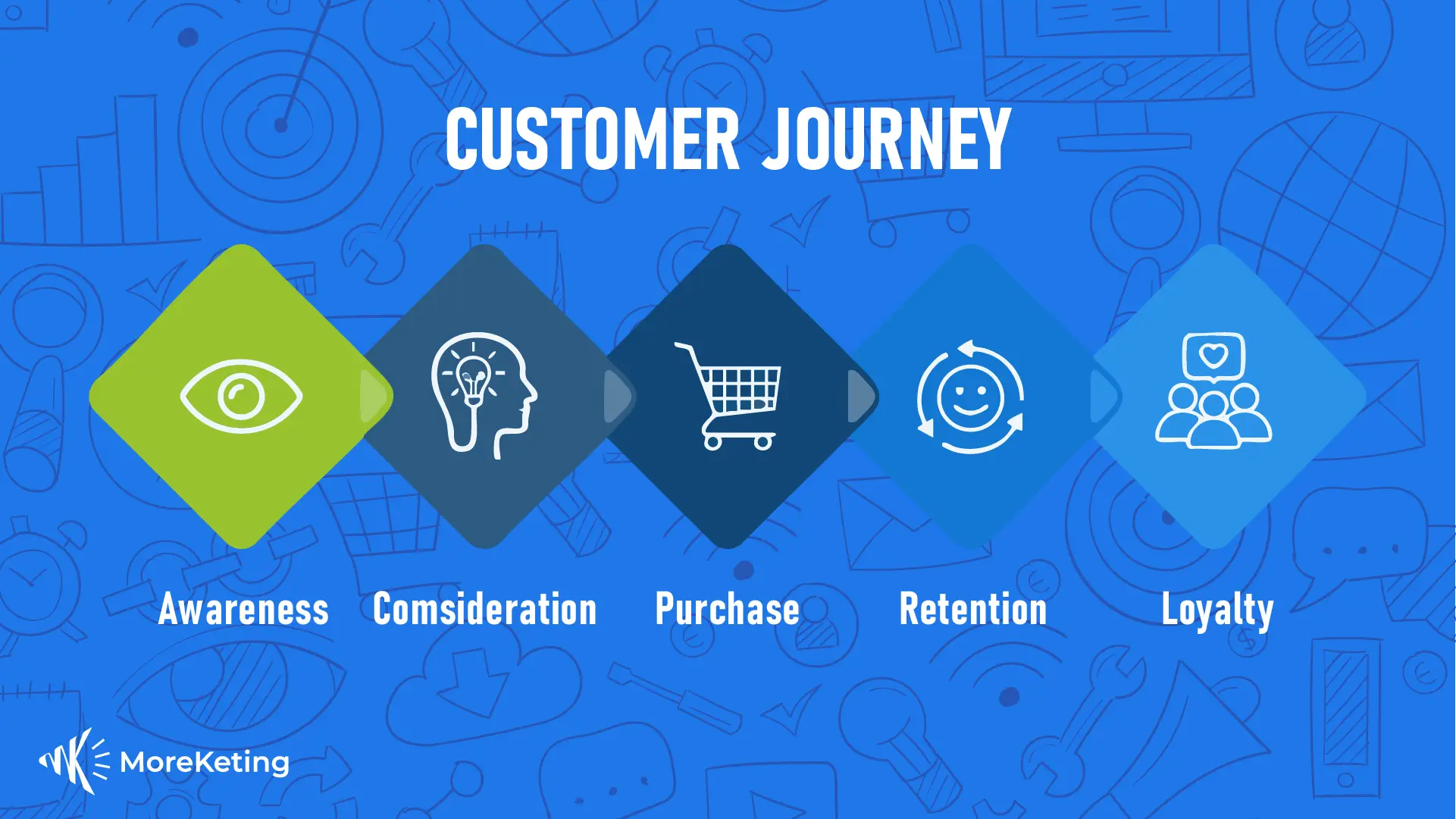
If you’ve ever asked yourself what it means to really know your customers from their first instinct to purchase, or through re-purchase, a customer journey map is the answer. It’s a visual aid designed to show you every step of your customer experience journey — what they’re thinking, how they’re feeling, and where they’re interacting with your brand — (basically their perception about your brand) allowing you to make better choices and build stronger relationships.
At MoreKeting, we’re here to help companies like yours transform those insights into actual strategies that increase engagement, fuel retention, and create stronger relationships. In this guide, we’ll show you how to develop a customer journey map that works—and help you develop a better understanding of what it is and what common mistakes to avoid along the way.
What is a Customer Journey Map?
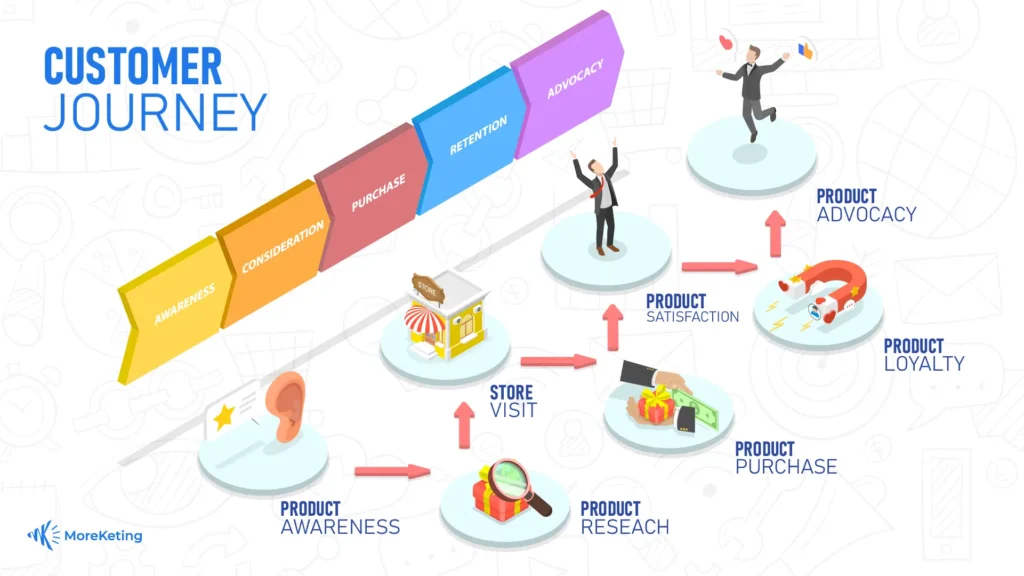
A customer journey map, also known as a buyer’s journey, is a visual representation of how people interact with your brand — from when they first hear about you until they become loyal customers and sometimes even advocates. HubSpot states, A customer journey map enables you to put yourself in your customer’s position — and see what they’re feeling, thinking, doing, and wanting at every stage of the buying process.
More precisely, it’s a detailed map of the key moments when your customers engage with you or your product — the questions they ask, pain points they experience and motivations that drive them to trust in what you provide. As Gartner describes, these discoveries are so potent because they uncover instances where user experiences can be enhanced, friction points removed and authentic strategies met for the customer.
When you chart those interactions, you’re not just reviewing data — you’re rediscovering the story of every decision that your customers make. Otherwise, this roadmap is your manual for bettering how our company communicates, adds value and develops lifelong relationships
Why Is It So Important To Have A Customer Journey Map?
How To Create a Practical Map?
When attempting to design the ideal customer journey map, you should adhere to a few design principles:
- Your customer should always come first. Start by putting yourself in your customer’s shoes. Build your journey map around them.
- The best way to start a journey map is to ask some of your main customers a few questions, like a short survey; this will allow you to gain insights and design your customer journey map the best way.
- Stay focused. You should always focus on one thing: your customers. If you try to do too much in one map, you will confuse yourself and your stakeholders.
- Visualize the flow of conversations and dialogue your customers have with your brand; this will help them better understand your product and its benefits. Make it easy for your customers to understand the core benefits of your product. Your brand’s tone of voice is crucial in this part.
- Be relevant. Ensure the efforts you are doing are pertinent to your specific industry and customers. Your customer journey map will have limited value to other industries and customers. Always niche down and provide help that adresses any pain points your customer might have.
Things To Avoid When Creating a Journey Map For Your Company

Although the CJ map design principles we discussed above will help you create a compelling journey map, there are a few things you should avoid when doing so:
- Do not try to be all things to all customers. It is essential to understand your core customers and their needs thoroughly. If your customer journey map is narrow enough, it will be easier to pinpoint pain points and find ways to solve them.
- Do not overdo the visuals. Again, your map should focus on one thing: your customers. You must put more visuals on the map to maintain attention and focus. But this can turn counterproductive when done excessively, remember that design principle “Sometimes, less is more”.
- Use an external tool. A few options are available if you want a tool to help you visualize your mapping work. These tools will allow you to represent your customers on the go visually. Moreketing’s FREE consultation call could be the 1st step.
- Don’t stick with generic. Make sure your customer journey map is specific to your customers and their needs. If it is generic, it will have little to no value and you won’t be able to stand out.
The CJM is an essential communication tool in your arsenal. Please do not change it. Once you have something stablished and that you are happy with, please do not alter it since the appropiation of this from every member of the organization is vital to the correct functioning.
Conclusion
At the end of the day, a customer journey map isn’t just a marketing exercise — it’s a way to view your business through your customer’s eyes. And create a customer retention rate. Once you know what they’re feeling, needing and wanting at every step, you can build experiences that don’t just sell your message but connect with it.
Firms have noted up to a 20 percent increase in customer satisfaction and 15% improvement in retention simply due to companies aligning with the reality of human experiences according to Forrester. And that’s precisely what separates brands that talk to customers and those that actually listen.
At MoreKeting, we’ve experienced this for ourselves. Once businesses begin mapping their customer journeys with a specific intent in mind, they unearth deep insights – frustrations that were previously invisible to them, emotional triggers and opportunities to delight their audience. It’s not just a matter of diagrams or data points; it is about the cultivation of empathy in service of action.
And if you’re ready to forge deeper customer relationships, begin by mapping their story — and let us help you pen the next chapter.
FAQS
What is the process of developing a customer journey map for your company?
How to create a customer journey map It begins with the identification of your target audience, and what they need at each stage of their customer journey. Chart the customer journey touchpoints (awareness, purchase and post-purchase and beyond) and indicate customer feelings or actions at each one.
This visual map allows your marketing team to identify friction points and learn how they can improve customer satisfaction as well as retention through a higher level of engagement and support.
What are the key steps to build an effective customer journey map?
The best marketing strategies start with data and empathy. Begin by researching real customer feedback, analyzing behavior patterns, and mapping each touchpoint along the customer experience. Visualize these insights in a clear, easy-to-read format. Then, refine your map based on ongoing data to strengthen customer satisfaction and long-term retention.
A good journey map grows with your business — and with your customers.
What are the key advantages of customer journey maps for better retention?
What are the Top Mistakes in Customer Journey Mapping?
One pitfall is to have a template map that isn’t customized for specific customer journey touchpoints or ‘typical’ buyer behavior. Another is obsessing over design rather than the true customer experience.
Neglecting research or feedback can result in assumptions that hamstring customer satisfaction. And don't be afraid to make that map customer-centric, action-oriented and geared toward your marketing goals to help drive long-term retention.