

You make a website that’s good enough to appear on the first page of Google by understanding how people and search engines interact with your site. From how pages load, to how content is organized, nothing is small here.
You want a design that’s fast, mobile-enabled and easy to navigate with content that matches what your audience is searching for. According to any good Charlotte digital marketing company, a well-designed site for SEO combines visuals, user experience (UX) and strategy to ensure that your website shows up high in the search results and attracts the right people.
How to design a website that Google loves
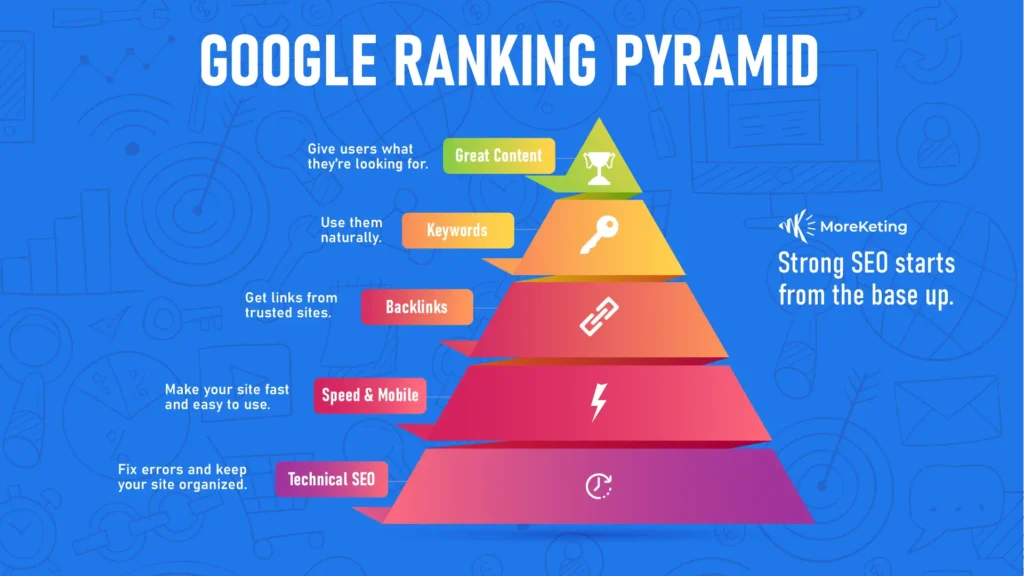
The first step is to make your site technically sound. Note that search engines favour sites that are easy to crawl and load quickly. Give it clear navigation, descriptive page titles and well-optimized images so that Google can understand your pages.
Ensure this layout perfectly scales to any screen size – since mobile-first indexing, your layout on mobile directly influences it ranking.
But the technical is only one part of the story. Google also cares about how users experience your site. Pages should load quickly, the content should be legible, and your design should lead visitors around on your site naturally from one section to another. If users are sticking around, exploring further, and engaging with your content, that’s a strong signal to Google that you’re offering true value on your site.
Building content around what people actually search for
Good design goes side by side with good content. There’s more to it than that though: It’s not just adding text words into your website and then hoping for the best; you need to know what keywords your potential customers use AND how to put them in there. Begin by doing research on what questions the people in your industry are asking most frequently and then build your pages around those areas.
Create content that’s clear, helpful and easy to read – and satisfies real requirements. Utilize headings to direct readers, include internal links that tie similar topics together and use images to spice up your message.
If you’re a home services business owner, such as in concrete work, pool installations, architecture or interior design, we’ve seen success first hand at MoreKeting. People don’t want services; they want solutions. They want to learn what type of contractor to hire, how long materials last, or which designs complement the way they live. And as a Charlotte digital marketing agency, we know that when your site addresses those same questions with clear language and forthright insights, Google takes notice.
Your design should be executed in that content easy to find and a pleasure to navigate. Neat layouts, readable text, and intuitive menus encourage visitors to stick around and interact more. When interesting content and a good looking site meet, Google has confidence that your business is a good place to refer potential clients, so it shows off your brand.
What is UX (user experience)? And why is it important?
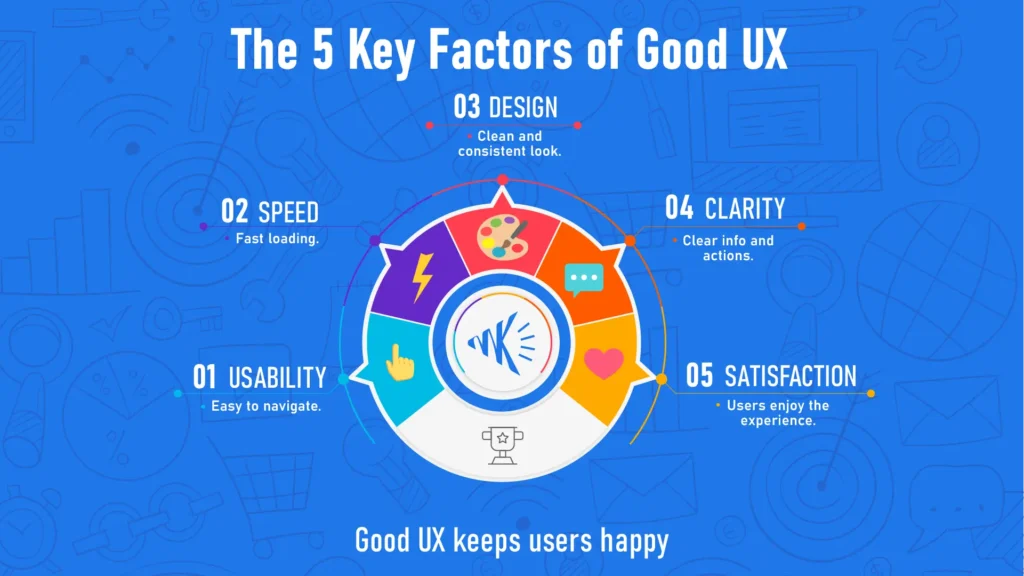
User experience, or UX, is about how visitors feel when they’re browsing your website. It’s what induces someone to stick around and explore or click away after a few seconds. A winning UX is one in which your site not only loads fast, but looks tidy and helps those who arrive find exactly what they are looking for. On, Google explains that a good user experience helps search engines understand your pages well and can directly impact how well these pages rank.
We believe in the power of intentional UX design, not just because it contributes to search rankings but also because it brings visibility to your brand when users successfully navigate their way through your site. When users like what they find on your site, they are more likely to trust in your business, share their content and return again. That type of interaction signals to Google that your site provides value and that is what makes your brand succeed on the Web.
Checklist to improve your website’s UX:
- Make sure your site loads fast on mobile and desktop
- Keep navigation short, clear, and intuitive
- Use visuals, colors, and fonts that fit your brand’s personality
- Add clear calls to action so users know what to do next
- Keep paragraphs brief and easy to scan
- Test your website often to ensure everything runs smoothly
How UX and SEO work together?
A good-looking website and effective search engine optimization (SEO) are soulmates. Google aims to present users with pages that are quick and easy to navigate, useful and fun. If your UX supports visitors in flowing naturally through your content and your SEO ensures that your content is easy to find, you’ve aligned forces to create a cycle that produces satisfied users and Google. According to Google Search Central, good UX does indeed help achieve higher rankings, as it indicates to search engines how well a page meets people’s real needs.
User experience also affects behavior signals such as how long people remain on your site, or the number of pages they visit, and how frequently visitors come back. These are relevance and satisfaction signals that search engines use to improve rankings. As HubSpot points out, an intuitive layout, straightforward organization and a wealth of well-targeted content can reduce bounce rates and improve SEO in the long run.
For companies in industries such as home services, architecture, interior design and any others where visuals and precision are important, the effect of joining UX and SEO is even more pronounced.
A clear and concise layout allows would-be clients to easily locate examples of work, service specifics, and contact points— while also effectively communicating the necessary trust signals to Google. According to the Search Engine Journal, when people are having fun with your site, they’re far more likely to interact, convert and then share content (increasing brand visibility while doing so).
Checklist to align UX and SEO:
- Organize content in a logical, easy-to-follow structure
- Use descriptive headings that help both users and search engines
- Optimize images for faster loading without losing quality
- Keep internal links relevant and helpful
- Review analytics regularly to understand how visitors move through your site
Optimizing website performance for SEO success
Let’s talk about site speed—Google prioritizes fast-loading websites in its ranking algorithm, and users tend to abandon slow sites.
Boost Your Page Load Speed
To ensure your site loads quickly, optimize your images by compressing them and using the right formats. One client we worked with had stunning high-res images, but they slowed down the site. After optimizing their images and enabling browser caching, the page speed improved dramatically, leading to higher engagement and better rankings on Google.
Ensure Your Site is Secure (SSL Certificates)
If your website doesn’t have an SSL certificate, Google will mark it as “Not Secure”, which can deter users from visiting. Having an SSL certificate not only secures your site but also boosts your SEO ranking on Google.
The Power of Backlinks in SEO
Earn Quality Backlinks
Backlinks are like endorsements in the eyes of Google. The more high-quality backlinks you have, the more Google will trust your site and rank it higher. One of our architecture clients was featured in online design publications, earning valuable backlinks and significantly improving their ranking for high-traffic keywords.
Building a website that ranks high on Google isn’t a one-time task—it’s a continuous process. The websites that consistently rank well are those that prioritize both SEO strategy and user experience. Keep evolving, stay informed on the latest SEO trends, and watch your site climb through the ranks.
Moz’s Keyword Research Guide is perfect for this matter.
Building a human-centered online presence

Developing a powerful online presence begins by knowing two things: people and data. A good strategy balances how humans think with how search engines value things. Everything from layout choice to copy should serve this function: making information clear, trustworthy and relevant for your audience.
There’s a problem that many businesses in Charlotte (both home service companies and the creative industries) share: We need to find a way to show up well on Google without coming across as fake. That’s where strategy matters. Rather than rushing to adopt every new marketing trend, concentrate on what your customers are already looking for and how your website addresses those questions.
Naturally, a page which is intuitive and targets actual needs ranks better in search engine (SEO) result pages and helps build long-term brand awareness.
Once you start treating your website as part of the customer journey rather than a sales tool, everything works together: design, content and SEO form one ecosystem. While making decision paths simple and clear will improve conversions, consistent messaging combined with a strong visual hierarchy can also be used to push prospects down the funnel towards conversion.
For Charlotte businesses, working with a reputable SEO company in Charlotte will enable you to turn this knowledge into real results. But even prehiring help, ask:
- Am I user-friendly from the customer’s point of view?)
- Am I responding to very specific querying my audience are doing on the internet?
- Do my calls to action feel natural, not contrived?
- A user-centric focus doesn’t just enhance a site’s appearance but also changes how people experience and remember your brand.
FAQ’s
Designing a website that ranks high on Google begins with knowing how people interact with your site. Ensure that your pages load fast, that your layout is mobile-friendly and content reflects what people are actually searching for.
For home service companies — (concrete contractors, pool installers and interior designers, for example) — the best SEO-friendly website is one that’s easy to locate and easy to come back to. Emphasize service pages that address standard client questions, include local keywords and show real photos of your work. This helps search engines associate your business with people nearby who are searching for what you’re offering.
Great UX keeps visitors on your site, makes them click around, and increases time spent. When people can quickly and easily access what they’re looking for
Working with a Charlotte digital marketing firm can help small businesses transform their websites into actual lead generators. Even better, agencies that are familiar with the local market can help optimize your site for local search to receive more inquiries from potential clients in your area, improve your visibility on Google Maps and give you a leg up when building a brand that resonates well with the community.